Art in Tanzania internship program
What is volunteering?
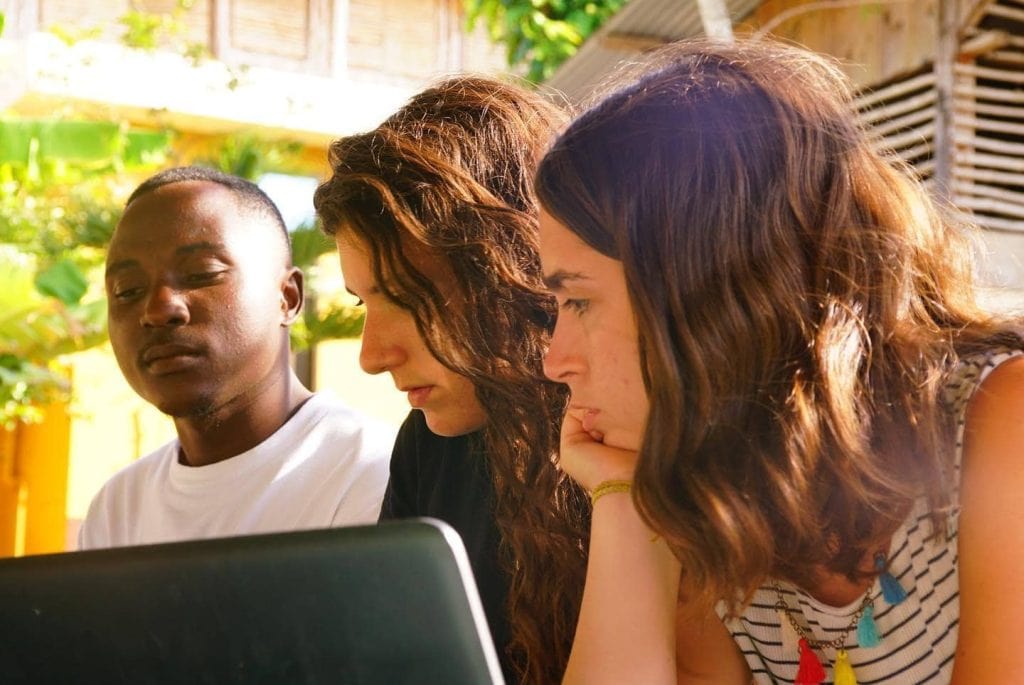
Volunteering is generally considered an altruistic activity where an individual or group freely gives time “to benefit another person, group or organization” Volunteering is also renowned for skill development. It is often intended to promote goodness or to improve human quality of life. Volunteering can have a positive impact on both the volunteer and the person or community they serve. It is also intended to establish contacts for potential employment opportunities. Many volunteers are specifically trained in their areas, such as medicine, education, or emergency rescue. Others serve as needed, such as in response to a natural disaster.
The concept of “volunteer”
The term ‘volunteer’ has recently been introduced into the lexicon of the social sciences, and not without ambiguity and vagueness connected to its original connotation of common sense.
It is agreed almost unanimously that the term ‘voluntary action’ identifies a particular type of social action, and the gratuity often characterises it, that is, without financial reward, some reimbursement for expenses, stipend-type payments, or payments in kind, such as the provision of meals and transport. Indeed, these kinds of payments are often regarded as good practice as they make opportunities for volunteer action more accessible and inclusive.
The action that qualifies as a form of social altruism or philanthropy is a type of action that takes “a form of gift generously offered”. However, most of the time, it is produced and delivered in an organised manner.
However, gratuity alone does not appear to be a sufficient criterion to distinguish voluntary action from other forms of action (such as leisure) that are not performed to obtain, in return, an economic reward. The voluntary action goal is geared to produce benefits for the exclusive advantage of individuals clearly distinguished from those who act, and it is configured as a service or distribution of goods to others for the common good. It should directly or indirectly benefit people outside the family or household, even though the volunteer typically benefits from the experience. In many cultures, a volunteer is often described as “someone who works for community well-being”.

Why volunteer?
With busy lives, it can be hard to find time to volunteer. However, the benefits of volunteering can be enormous. Volunteering offers vital help to people in need, worthwhile causes, and the community, but the benefits can be even more significant for you, the volunteer. The right match can help you to find friends, connect with the community, learn new skills, and even advance your career.
Giving to others can also help protect your mental and physical health. It can reduce stress, combat depression, keep you mentally stimulated, and provide a sense of purpose. While it’s true that the more you volunteer, the more benefits you’ll experience, volunteering doesn’t have to involve a long-term commitment or take a lot of time out of your busy day. Giving in simple ways can help those in need and improve your health and happiness.
Benefits of volunteering: 4 ways to feel healthier and happier
1. Volunteering connects you to others
2. Volunteering is suitable for your mind and body
3. Volunteering can advance your career
4. Volunteering brings fun and fulfilment to your life
About EVOLVET
EVOLVET (European Volunteer Coordinators Vocation Education and Training) was a European strategic partnership funded by the Erasmus+ programme of the European Commission, composed of seven organizations working with development projects for social inclusion and education from Austria, Finland, Italy, Poland, Portugal, Slovakia and Spain.

The project, which took place from 01/09/2015 to 31/08/2017, aimed at giving a positive impulsion to the training of volunteer coordinators by providing a standardized tool-kit containing on-the-job training materials for skills and competencies commonly demanded to volunteer coordinators across Europe, not only for the management of development projects but also on the concrete education and training of the volunteers taking part on them.
Moreover, the project also facilitated transnational training mobilities, allowing volunteer coordinators from different partner organisations to participate in common education initiatives on volunteer management, which were embedded within the project’s activities.
Creating standard pan-European training materials for professional volunteer coordinators is intended to enhance the transparency and recognition of their qualifications and competencies, utilising established systems based on measurable recognitions at the transnational level, including those acquired through formal, non-formal, and informal learning.
Furthermore, the project was focused on identifying the skills required by professional volunteer coordinators in development organisations, which allowed the composition a standard curriculum of competencies for this professional category for being used afterwards for both vocational education and training centres (to develop new learning pathways, methodologies and degrees) and organisations working with projects for local and international development (to detect which competences should be reinforced on their teams and detect those skills needed for future recruitments).
Participation of Art in Tanzania at the first transnational training for facilitators of EVOLVET

Art in Tanzania is continually seeking to establish new collaborations with other organisations, whether local or international. This month, from June 19th to June 25th, the first transnational training for facilitators of EVOLVET, which stands for European Volunteer Coordinators Vocation Education and Training, is taking place in Vienna, Austria. Art in Tanzania is now part of the EVOLVET project, co-funded by the European Commission through the Erasmus+ programme.
Kari Kohonen, the head of Art in Tanzania, is participating in the first training in Vienna. EVOLVET is a two-year partnership with the Erasmus+ programme that CONGDCA organized. This is an organization from Spain and is additionally supported by several institutions, namely LVIA from Italy (www.lvia.it), Fund for Intercultural Education from Poland (www.miedzykulturowa.org.pl), Pista Mágica – Associação from Portugal (www.pista‐magica.pt) , Platforma dobrovolnickych centre an organization from Slovakia (www.dobrovolnickecentra.sk), Südwind Agentur from Austria (www.suedwind‐agentur.at) and of course Art in Tanzania Ry. Art in Tanzania was founded in Finland but is mainly active in Tanzania.
This training will emphasise the first meeting, which will involve exchanging different experiences and elaborating on materials prepared during the previous months. One of the main aims will be the implementation of the subsequent phases of this project. This is made possible by the staff conducting workshops that combine formal and non-formal methodologies to bring together different perspectives and foster interesting discussions and exchanges among numerous organisations.


